
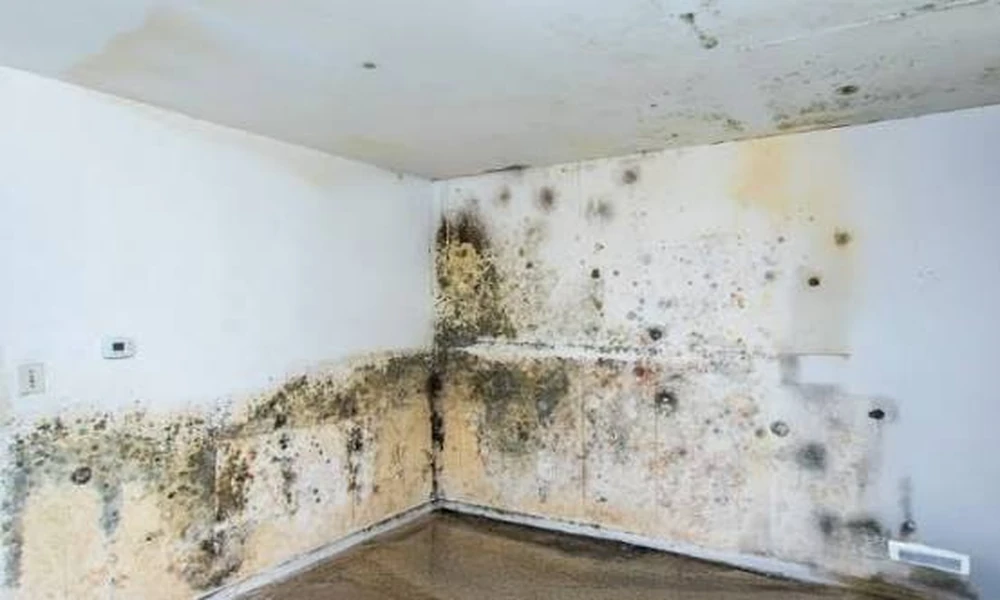
A water stain on drywall shows where water surfaced, not where it traveled. Water runs down studs, wicks sideways through gypsum and carpet pad, pools under vinyl plank and soaks into the bottom plate long before it shows on a painted face. That gap between what the eye sees and what the materials actually hold is why professional water mitigation runs on measurement rather than appearance.
Timing raises the stakes. The EPA’s water damage cleanup table sets a 24 to 48 hour window for drying wet carpet, drywall and wood before mold becomes a real concern, and that clock runs whether or not anyone has found the full extent of the wet area. A drying plan built around the visible stain alone leaves the hidden portion sitting damp while the window closes.
Local conditions add their own complications in the Cumberland Valley. Humid Hagerstown summers slow evaporation and make open windows a poor drying tool, while cold winters can hide wet framing behind walls that feel cool anyway. Many older homes in town and across Washington County have plaster over wood lath, brick walls and fieldstone or limestone foundations, materials that absorb water differently from modern drywall and give it up more slowly. Heavy summer thunderstorms and high water along Antietam and Conococheague creeks usually announce themselves in basements first.
For homeowners in Hagerstown and the surrounding tri-state area, Remont Restoration pairs moisture detection with full water damage restoration under one family-owned, IICRC-certified crew. Their team runs a moisture assessment to trace how far water actually spread, then handles extraction, drying and emergency cleanup after plumbing leaks, storms and floods, with 24/7 response across Washington County and neighboring Maryland, Pennsylvania and West Virginia counties. If a stain, a musty corner or a recent storm has you wondering what is going on inside your walls, request a moisture assessment before the drying window runs out.
Source First, Then the Walkthrough
Stopping the water. Nothing gets measured until the source is controlled. That might mean shutting off a burst supply line, isolating a failed water heater, tarping a damaged roof or getting a dead sump pump running again. Groundwater seeping through a foundation wall needs its own plan, because it can keep feeding moisture into a basement after the surface water is gone.
Sorting the water. Technicians classify the water using the IICRC S500 categories: clean water from a supply line, gray water from appliances, or black water from sewage and floodwater. The category decides whether materials can be dried in place or must come out, and whether air movers can run at all before cleaning.
Walking past the obvious. A good walkthrough covers the rooms below and beside the visible damage, the inside of closets, the space behind kitchen toe kicks and the ceiling under any upstairs bathroom. Photos and notes go into the job file from the first minute.
Setting a dry standard. The tech takes readings on the same materials in an unaffected part of the house. That baseline, not a generic number, becomes the drying goal, since a 1920s plaster wall and new drywall read very differently even when both are dry.
Moisture Mapping
Working outward. Readings start in the wettest spot and move outward in a rough grid until they match the dry standard. The boundary often gets marked on the wall with tape, and each reading is recorded on a sketch of the room. That sketch becomes the moisture map every later visit is checked against.
Reading between layers. No single instrument tells the whole story, so pros stack them. Each tool answers one narrow question, and its blind spots are covered by the next.
| Detection method | What it finds | Its limitation |
|---|---|---|
| Pin-type moisture meter | Moisture content between the pin tips in wood, drywall and plaster; insulated pins reach bottom plates and subfloors | Reads only the spot it touches; leaves small holes; readings in drywall and masonry are relative, not exact percentages |
| Pinless (non-invasive) meter | Moisture beneath tile, vinyl, hardwood and paint across wide areas quickly | Shallow scan depth; metal, foil-backed insulation and dense materials can produce false highs |
| Thermal imaging camera | Cool patterns caused by evaporation from wet surfaces, useful for spotting suspect zones fast | Measures temperature, not moisture; drafts, missing insulation and ductwork create look-alike patterns |
| Thermo-hygrometer | Air temperature, relative humidity, dew point and grains per pound inside and outside the drying zone | Describes the air only; says nothing about which material is holding water |
| Inspection openings | Direct view of insulation, framing and hidden mold inside a cavity | Destructive and limited to the spot opened |
Thermal imaging points the way and meters confirm. The EPA mold course chapter on finding moisture describes the same principle: moisture meters help investigators locate hidden wet areas where growth may be developing.
Extraction Comes Before Drying
Pulling liquid water out. Extraction removes standing and absorbed water far faster than any dehumidifier. Weighted extraction tools press water out of carpet and pad, and pad soaked by anything other than clean water is usually discarded.
Deciding what stays. Wet fiberglass insulation, swollen particleboard and laminated baseboards rarely survive. Drywall gets cut just above the highest wet reading rather than at a fixed height. Plaster on lath can often stay, but it dries slowly and needs patient monitoring.
Drying Setup
Air movement and dehumidification. Air movers sweep wet surfaces to speed evaporation, and dehumidifiers pull that moisture out of the air before it settles into dry materials. In a Cumberland Valley July, outdoor air often carries more moisture than the drying zone, so the room stays closed and the dehumidifiers do the work. In winter, controlled heat raises the air’s capacity to hold moisture and shortens drying.
Opening cavities. Small holes drilled behind removed baseboards let air move inside wall cavities. Cabinet toe kicks come off so air can reach the subfloor beneath.
Basements and masonry. Stone and block walls wick water upward and release it slowly. A slab or foundation wall can keep feeding humidity for days after the floor looks finished.
Verifying Dry With Follow Up Readings
Daily logs. The tech returns to the same points on the map with the same meter and records them beside the atmospheric readings. Falling numbers mean the setup is working; flat numbers mean equipment needs to move or another hidden source exists.
Calling it dry. A material is dry when it matches the dry standard taken on day one. For framing, NDSU Extension’s flood recovery guidance says wood should read below 15% moisture content before drywall or paneling goes back up. Plaster and masonry usually lag behind the wood.
Why the paperwork counts. Those logs show an insurance adjuster that drying was handled correctly, and they tell the rebuild crew the walls are ready to close.
A wall that feels dry on the surface tells you very little about the stud behind it or the subfloor beneath it. The real answer lives in the moisture map, the daily readings and the final comparison to a dry baseline, so it is worth asking any restoration crew to walk you through those numbers before the drywall goes back up.
