
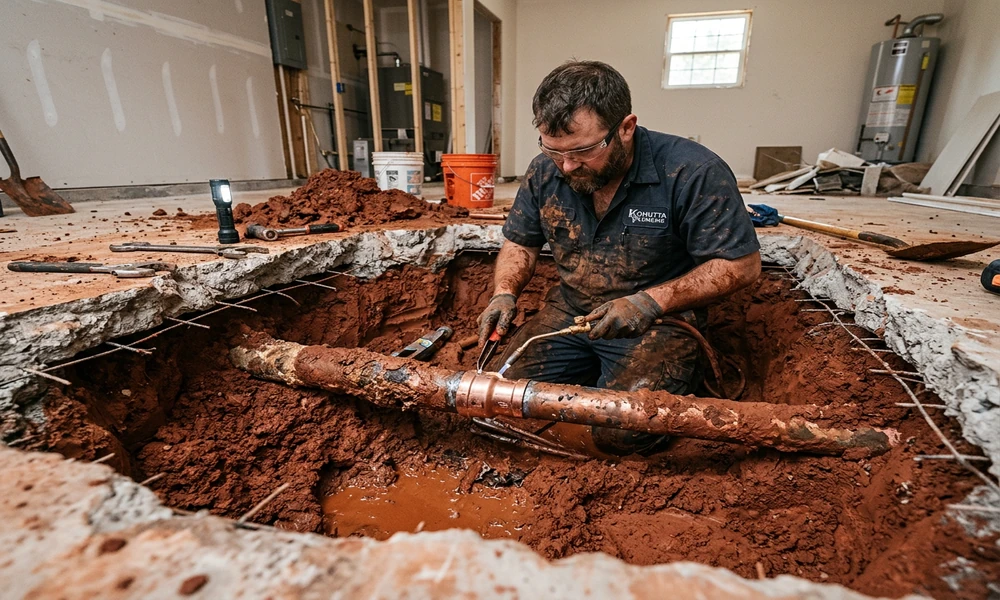
Much of San Antonio sits on dark, heavy clay that behaves a lot like a sponge. Soak it during a September downpour and it swells. Bake it through a long August and it shrinks, opening cracks in the yard wide enough to drop a pencil into. Homes built on concrete slabs ride on top of all that movement, and so do the water and drain lines poured into or laid beneath them. Year after year of wet and dry seasons, those pipes take a slow beating that most homeowners never notice until water turns up somewhere it has no business being.
Catching a slab leak early comes down to knowing which clues matter, and pinpointing one is where local experience earns its keep. Green Ridge San Antonio Plumbing Services is a locally owned company working out of an office on San Pedro Avenue, with a team that has spent more than 25 years on residential and commercial jobs across Bexar County and nearby towns like Schertz, Cibolo and New Braunfels. Slab leak repair sits next to its drain, sewer, water heater and softener work, all handled under Texas Master Plumbing License No. 43445, and the crew gives a price before any work begins, which counts for a lot on a job where the scope can feel uncertain at the start.
The Ground That Never Sits Still
Expansive clay does not move evenly. The edges of a slab dry out and soak up water faster than the middle, so a house can see its perimeter drop during drought and lift again after heavy rain. Engineers call these edge lift and center lift conditions, and both put stress on anything rigid running through the foundation.
North of the city, soils thin out over limestone and behave a bit better. South and east, where the deep clays dominate, the swings can be dramatic. A copper line cast inside concrete cannot flex the way the ground wants it to, so the strain gathers at fittings, at bends, and at the spots where pipes rise out of the slab under sinks and tubs.
How a Pipe Under Concrete Actually Wears Through
Soil movement is only one culprit. Hot water lines expand and contract every time a shower runs, and that tiny repeated motion rubs copper against gravel, rebar or rough concrete until a pinhole forms. That is why hot side leaks show up more often than cold ones.
Water pressure plays a part too. Pressure across the local utility’s service area can vary widely, and anything consistently above about 80 psi works every joint harder than it should. A failing pressure reducing valve near the meter can quietly add years of wear in a short span. Older homes add another layer, since soft copper was sometimes kinked or nicked during the original pour, leaving a weak point that waits decades to fail.
Clues That Surface Indoors
Supply line leaks under a slab are pressurized, so they run around the clock. The signs tend to look like this.
- A warm patch on tile or wood flooring, often near a bathroom or kitchen
- The water heater cycling far more than usual even when nobody is using hot water
- The faint sound of running water with every fixture closed
- Carpet edges that feel damp or baseboards that start to swell
- New cracks in tile or grout lines that seem to spread
- A water bill that jumps without any change in habits
Drain line leaks behave differently. They only leak when water goes down the drain, so the meter stays still. Slow drains, a sewer smell in one room, soggy soil along the foundation, or a floor that starts to heave are the more common hints, especially in homes from the 1960s and 1970s with cast iron below the slab.
Letting the Meter Play Detective
Newer electronic meters in the city make a home check simpler than it used to be. The water utility even sends alerts when a home shows continuous use of five gallons or more per hour for two straight days. To run your own check, try this sequence.
- Turn off every faucet, the ice maker, the irrigation system and the water softener.
- Tap the meter’s display to reach the flow rate screen, which should read zero.
- If it shows flow, close the main shutoff valve at the house and look again.
- Flow that continues points to a leak in the yard line between meter and house.
- Flow that stops means the leak is inside, likely under the slab.
- Close the cold inlet valve on top of the water heater to see whether the loss is on the hot side.
The utility’s own guide on tracking down a leak’s source covers toilets, softeners and valves too, which helps rule out the easy suspects before anyone starts thinking about concrete.
What a Trained Ear Brings to the Search
Once the meter confirms a leak, a plumber pressure tests each line separately to narrow things down. Acoustic listening gear picks up the hiss of escaping water through concrete, thermal imaging traces warm water spreading under the floor, and line locators map exactly where the pipe runs. The goal is to open the slab in one small spot rather than several.
Drain lines get a camera inspection and sometimes a hydrostatic test, where the system is plugged and filled to see whether the water level drops. Homes with post tension slabs need extra caution, because those steel cables sit under enormous tension and cutting into the wrong place can be dangerous. A stamp near the garage often signals that kind of foundation.
Four Roads Back to a Dry Floor
Direct access means cutting a small opening through the floor over the leak, repairing the pipe, and patching the concrete. It is fast and affordable when the leak sits under an easy spot, though flooring has to be lifted.
Tunneling goes under the foundation from outside. It spares the interior, which suits leaks beneath cabinets or tubs, but the digging adds labor.
Rerouting abandons the failed section and runs new PEX through the attic and walls. It is a popular fix for hot lines, though attic runs need good insulation in Texas heat.
Repiping makes sense when a house has had more than one slab leak, because aging copper rarely fails just once.
Insurance Questions and the Foundation Worry
Many Texas homeowner policies help with the cost of tearing out and restoring the floor, along with the water damage that followed, while excluding the failed pipe itself. Wording varies, so photos, the plumber’s written findings and repair receipts are worth keeping. A leak can also wash away or swell the soil beneath a slab, so if doors start sticking or drywall cracks after a repair, a foundation evaluation is a sensible next step.
Keeping the Soil on Your Side
The best protection is steady moisture around the house. During long dry spells, a soaker hose set a little way out from the slab, run within local watering rules, keeps the clay from shrinking hard at the edges. Gutters that empty well away from the foundation and a yard graded to shed storm water stop the opposite problem after heavy rain. Large trees planted close to the house pull moisture from the soil under the slab, so placement matters more than people expect.
Checking water pressure once a year and paying attention to how often the water heater runs costs nothing. Small habits like these will not change the ground beneath San Antonio, but they give the pipes buried in it a far easier life.
