
Choosing a new roof used to mean picking a shingle color that matched the trim. In inland valleys, the decision now carries more weight. Long summer heat, dry grassy hills, cool wet winters and rising insurance scrutiny all press on the same surface. The material you choose will deal with all of them for decades.
Most homeowners face this choice once, maybe twice, in all the years they own a home. That makes it hard to build up any instinct for it. Sales brochures praise every product, and neighbors usually recommend whatever happens to be on their own house. A clearer approach starts with what the local climate actually does to a roof, then works backward to the material.
Anyone planning a roof replacement in Livermore runs into the same mix of conditions. Afternoons in the Tri-Valley can run well past 100 degrees in summer, winter storms can be heavy, and open hillsides sit close to many neighborhoods. Long-established local roofers have watched each type of roof age under those conditions. Their sense of what holds up and what fades early is worth more than any spec sheet.
The Forces Working on a Valley Roof
Before comparing products, it helps to name what the roof is up against. Four pressures do most of the damage over time:
- Heat and UV. Strong sun dries out asphalt, chalks paint finishes and weakens sealants around flashing.
- Temperature swings. Warm days followed by cool nights make materials expand and contract, which loosens fasteners and opens small cracks.
- Winter rain. Short, intense storms test valleys, flashing and underlayment more than gentle steady rain does.
- Wildfire embers. Wind can carry burning debris far from the fire itself, and the roof is one of the largest surfaces it lands on.
Each material handles these forces differently. None is perfect at all four.
How the Common Choices Compare
Architectural Asphalt Shingles
Asphalt remains the most common choice because it’s affordable, familiar to every crew and quick to install. Modern laminated shingles are thicker than the flat three-tab style that covered many older tract homes. Their main weakness in hot climates is heat aging, since sun and a hot attic slowly drive out the oils that keep them flexible. Lighter colors and reflective granules help, and a well-ventilated attic helps even more.
Concrete and Clay Tile
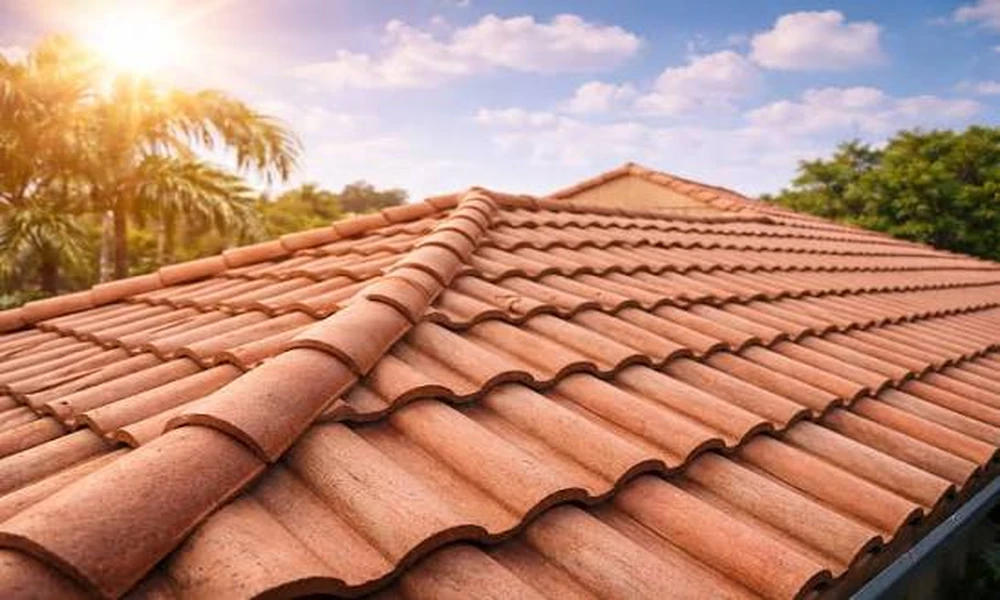
Tile suits Mediterranean and Spanish revival homes, and it shrugs off sun better than almost anything else. The tile itself can last a very long time. The underlayment beneath it can’t, and that’s what usually forces repairs on older tile roofs. Tile is also heavy, so switching from shingles to tile may mean an engineer has to confirm the framing can carry the load.
Standing Seam and Stone-Coated Metal
Metal has gained ground in fire-prone areas because it doesn’t burn and it sheds debris easily. Standing seam panels hide their fasteners, which avoids the gasket wear that troubles cheaper exposed-screw metal. Stone-coated steel imitates shingles or tile for owners who want the look without the weight. The main tradeoffs are a higher upfront price and the need for an installer who knows how to allow for heat expansion.
Synthetic Slate and Shake
Composite products made from polymers can mimic slate or wood shake at a fraction of the weight. Quality varies widely between brands, so fire ratings, UV resistance and warranty terms deserve a close look. They’re best treated as a premium aesthetic choice, not a default.
Why Reflectance Matters More Than Color Names
Two shingles both labeled “weathered wood” can perform very differently in July. What matters is how much sunlight the surface reflects and how quickly it gives off the heat it absorbs. The Cool Roof Rating Council publishes independent ratings for roofing products, and its guidance for homeowners stresses knowing your climate zone and the energy you’ll actually save before choosing.
In hot inland areas, a cool-rated roof can lower attic temperatures, ease the load on air conditioning and slow heat aging of the roofing itself. Local energy codes may also call for a cool-rated product when most of a roof is replaced. Your contractor should confirm the current requirement before you settle on a color.
Fire Ratings Are About the Whole Assembly
Fire resistance for roof coverings is graded Class A, B or C, and Class A is the highest. Many asphalt shingles, tiles and metal systems can reach Class A. Some only earn it “by assembly,” meaning a specific underlayment or cap sheet must be installed beneath them. Leave out that layer and the rating may not hold.
The research group IBHS has built its Wildfire Prepared Home standard around practical steps like this, and a Class A roof covering sits near the top of its list. The details around the roof matter as much as the field material. Open ends on curved tiles, gaps at ridges and gutters full of dry leaves can let embers settle even on a well-rated roof.
Matching the Material to the House
The right choice usually comes from a few honest questions. How long do you plan to stay in the home? A roof that lasts fifty years makes more sense for owners who will stay than for someone planning to sell in five. What can the framing carry? Will an HOA or architectural review limit your options? And how close does the house sit to open land, where embers become a realistic threat and not a distant one?
Budget matters too, but it works best weighed over the roof’s full life. A cheaper roof that cooks in the sun and needs replacing early may cost more over two decades than a sturdier one installed once.
The best result usually comes from treating the material, underlayment, ventilation and edge details as one system. A good roof in a hot, dry valley isn’t defined by a single product. It’s defined by how well every layer works together through every season.
