
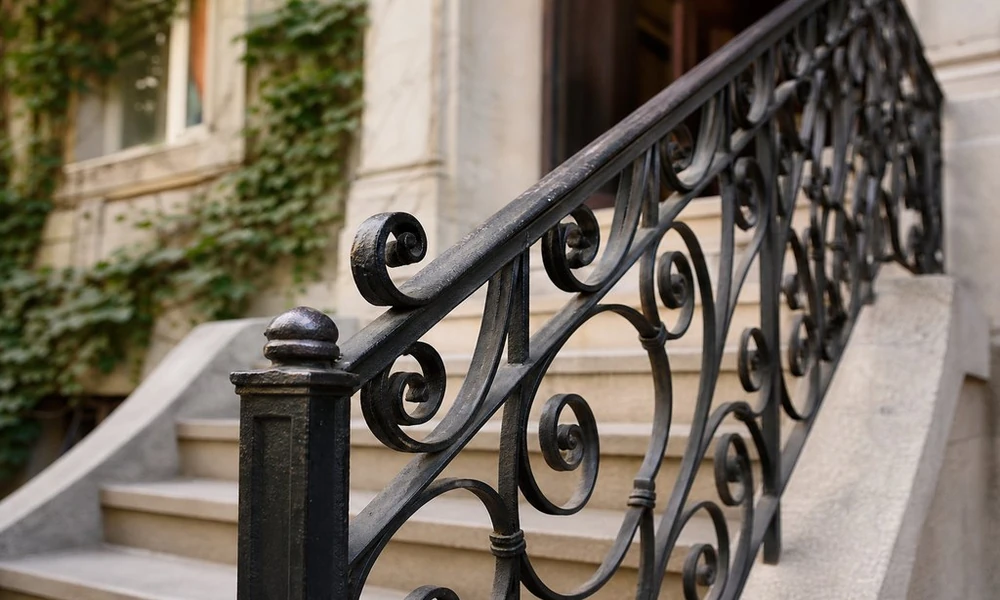
Rusted window guards, bowed railings and loose stair handrails on pre-war properties and brownstones can compromise not only safety but the character-defining details of these special buildings.
While the repair may seem straightforward, matching and duplicating the joinery, ornamentation and overall proportions of historic ironwork isn’t.
The goal of restoration is to make the ironwork stable, safe and functional while retaining as many historic details as possible. And that starts with identifying what’s original, what’s been modified and what can realistically be restored.
Assess Damage Before Choosing a Repair
Often times, the true extent of damage to ironwork is hidden under peeling paint, surface rust or even previous repair efforts. Surface rust and even some pitting may be remediated without compromising the integrity of gates and railings. Rust at stress points, however, like joints and anchoring points, can weaken ironwork substantially. The same is true of rust on thinner decorative elements.
When assessing the condition of ironwork, look for:
- Loose, cracked welds and other joints
- Metal that’s thinned or flaked away
- Rust, especially at the bottom of railings where water collects
- Damaged mounting plates and other masonry anchoring points
- Missing or damaged ornamental elements (finials, scrolls, collars, pickets, etc.)
- Gates that no longer open and close easily or don’t line up with latch hardware
Prior repairs may also provide clues as to the overall condition of ironwork. While some repairs, like a structural patch of newer, plain steel on an older decorative element of wrought iron (https://britannica.com/technology/wrought-iron), may be structurally sound, they aren’t necessarily sympathetic to the aesthetics of the ironwork as a whole. Other repairs can mask more substantial deterioration, like thick weld filler, tubing of the wrong size or shape, or excessive layers of paint.
Preserve Original Material and Reproduce Missing Details
In many instances, some, or even most, of deteriorated ironwork can and should be preserved, rather than rebuilding entire gates or sections of railing. This is particularly true of prominent or ornamental elements that define the character of the ironwork and property.
Preserving original ironwork could mean as little as:
- Splicing in new sections where the bottom rail has failed
- Replacing rusted-out mounting tabs
- Adding discreet structural reinforcement on non-visible sides
In many cases, targeted repairs like these will help maintain the irregularity of hand-forged elements and other nuances that lend historic ironwork its age-appropriate look, qualities that can be challenging to find in newer materials.
On the other hand, this level of effort would be overkill to repair and preserve common ironwork of more recent vintage, particularly when damage is minimal and there are no special materials, fabrication methods or craftsmanship worth preserving.
Replicate Missing Details From Reliable References
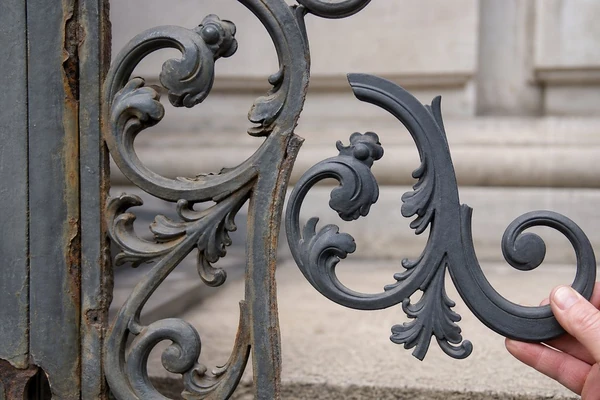
Whether you’re missing a rosette, basket or other ornamental element, or an entire section of railing needs to be replicated, successful ironmongers and iron fabricators will want as much information as possible to match the original ironwork, especially close-up photographs and, ideally, measurements of similar details that remain. Elements that look identical from a distance may be subtly different in scale, thickness, spacing or shape. European Custom Iron presents examples of historic restoration and replication work at https://europeancustomiron.com/services/historic-restoration-replication/, providing context for projects involving original ironwork.
Profile and Proportion
Pickets, for instance, may taper and have a distinctive width and height. Scrolls may have a particular curvature and relationship to surrounding elements, like rails and other pickets and scrolls.
Resolve Safety and Clearance Constraints
- Discreetly reinforcing behind existing rails
- Installing a second guard rail on the inside
- Rebuilding a section with taller pickets that match existing details
Prepare Surfaces and Test the Fit
A quality paint system not only enhances the appearance of exterior ironwork, but protects it from the elements, too. For coatings to do their job, however, the metal must be thoroughly prepared.
Depending on the profile, mass and ornamentation of each piece of ironwork, there are various cleaning and preparation techniques, from sandblasting, which is best for heavier structural elements, but may risk damage to thinner or cast iron details, to more controlled cleaning of rust scale, old coatings and other contaminants. From there, bare metal should be primed with a rust-inhibiting primer compatible with finish coats to follow.
As you clean, prepare or otherwise work on ironwork, be sure it will drain properly afterward, too. Standing water, whether inside rails and other hollow profiles, around masonry connections or under ornamental elements, can hasten deterioration and undo your hard work. Consider adding discreet drainage holes, sealing certain connections or otherwise adjusting the pitch of ironwork as needed.
Check the Assembly Before Finishing
Where possible, document repairs, replacements and other decisions before work begins. Label and photograph components as they’re disassembled; salvage and preserve any hardware that can be reused, and hold completed, but unfinished, sections next to existing pieces to check scale, profile and other details for a good match.
If possible, ask your fabricator to dry-fit sections before they’re primed and painted so any necessary adjustments can be made while you can still see the full railing, gate or other element.
